
Position might be the single most important concept you need to learn as a new poker player. Your position at the table determines when you act during each betting round, which directly affects how much information you have about your opponents’ hands before making your decision. Players who act later in the hand have a huge advantage because they can see what others do first.
Most beginners focus only on the cards they’re holding. They don’t realize that the same hand can be strong in one position and weak in another. Learning to use your position correctly will help you win more money and lose less.
This guide breaks down everything you need to know about poker positions. You’ll learn what each position is called, why some seats are better than others, and how to adjust your strategy based on where you sit.
What Is Position in Poker?
Position determines when you act during each betting round and directly impacts which hands you should play and how you should play them. Acting later gives you more information about your opponents’ actions, while acting earlier forces you to make decisions with less information.
Definition of Position
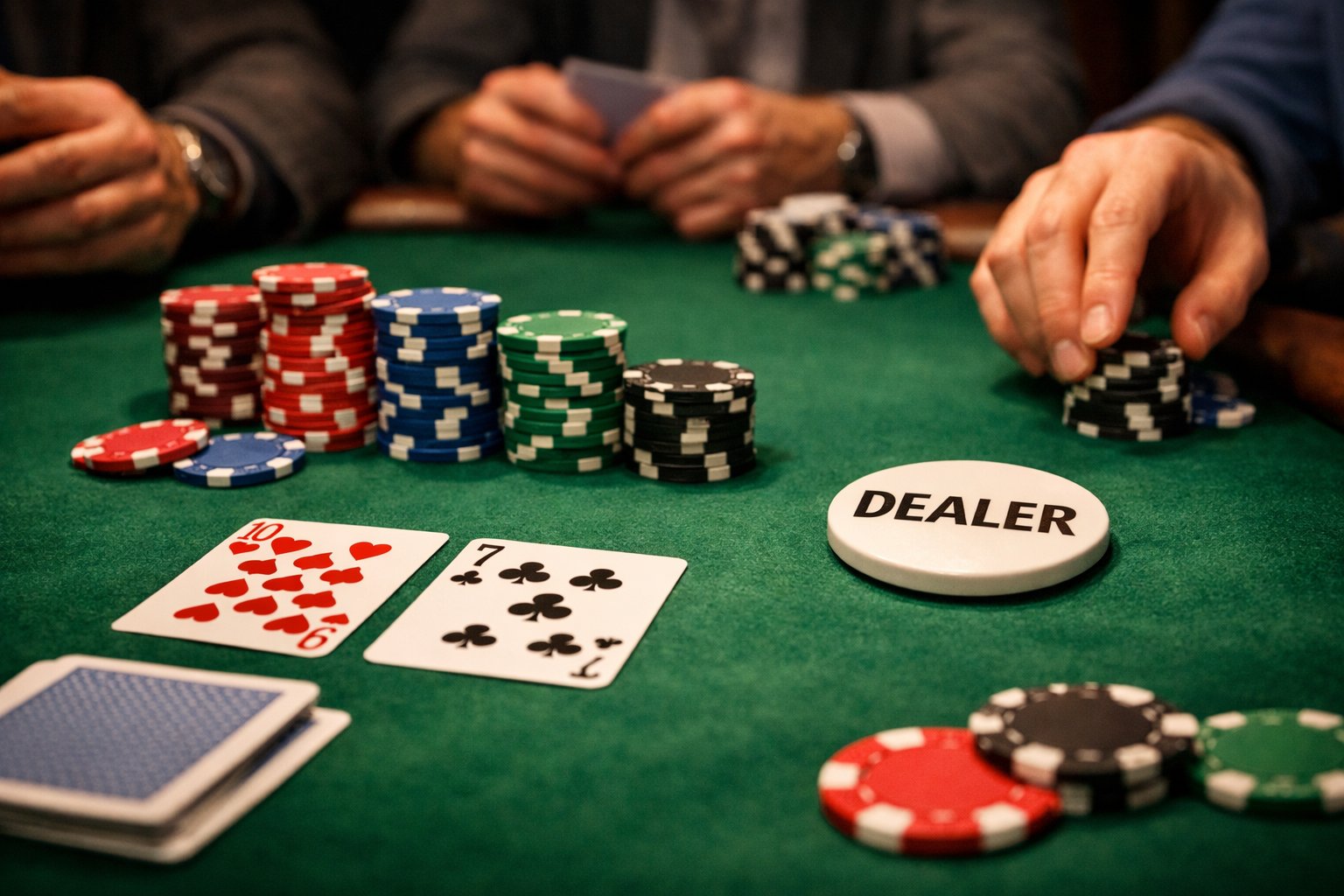
Position refers to where you sit at the poker table relative to the dealer button. The dealer button is a small disc that moves clockwise around the table after each hand. Your position changes with every new hand as the button moves.
The player on the dealer button acts last on all betting rounds after the first one. This is the most powerful seat at the table. Players to the left of the button act earlier, and players to the right act later in the pre-flop betting round.
Your position stays the same throughout a single hand but rotates as the game continues. This means you’ll experience every position at the table over time.
Why Position Matters in Poker
When you act later in the betting order, you get to see what other players do before you make your decision. You can see who bets, who raises, and who folds. This information helps you make better choices about your own hand.
Players in late position can play more hands profitably than players in early position. You can fold weak hands when facing action, or you can bet and raise more aggressively when everyone checks to you.
Early position players must act first with limited information. They need stronger hands to enter the pot because they don’t know what players behind them will do. Someone acting after you might raise, forcing you to fold a hand you paid to see.
Types of Positions at the Table
Poker positions fall into three main categories: early position, middle position, and late position. Each category requires different strategies and hand selection.
Early position includes the small blind, big blind, and the player directly left of the big blind (called under the gun). These seats act first and face the most risk.
Middle position covers the next two or three seats depending on table size. These players have some information but still face action from late position players.
Late position includes the cutoff (one seat right of the button) and the button itself. These are the most profitable seats because you act last on most betting rounds.
Understanding Table Positions
Your seat at the poker table directly affects which hands you should play and how you should play them. Players in later positions gain more information before acting, while those in earlier positions must make decisions with less knowledge about what opponents will do.

Early Position Explained
Early position includes the seats that act first after the cards are dealt. These spots are the Under the Gun (UTG), UTG+1, and UTG+2 seats.
UTG sits immediately to the left of the big blind. This player acts first before the flop and faces the most uncertainty. You don’t know what any other player will do yet.
When you’re in early position, you should play only your strongest hands. This means premium pairs like pocket aces, kings, or queens, plus strong combinations like ace-king.
Why early position is challenging:
- You act first on every betting round
- More players can raise after you
- You have no information about opponent actions
- Weak hands get you into trouble quickly
Playing tight from early position protects your chips. You’ll fold most hands, but the ones you do play will be powerful enough to handle pressure from players behind you.
Middle Position Overview
Middle position includes the seats between early and late position. In a nine-handed game, these are typically the Lojack and Hijack seats.
You gain some advantage here because early position players have already acted. If they fold, you face fewer opponents. If they raise, you know to proceed with caution.
Your hand selection can expand slightly in middle position. You can add more suited connectors and medium pairs to your range. Strong aces like ace-queen or ace-jack become more playable.
The number of players left to act still matters. With four or five players behind you, you need reasonable hand strength. You can’t play as loose as late position players do.
Late Position Advantages
Late position includes the Cutoff, Button, and sometimes the blinds after the flop. The Button is the most profitable seat in poker.
You act last on most betting rounds from late position. This means you see what everyone else does before making your decision. You can steal pots with weaker hands when opponents show weakness.
Your hand range opens up significantly here. You can play suited connectors, small pairs, and weaker aces profitably. Position compensates for having a less powerful hand.
The Button gives you maximum control. You act last on the flop, turn, and river. You can bluff more effectively, extract value with strong hands, and make better decisions overall.
Late position benefits:
- Maximum information before acting
- Easier to control pot size
- More profitable stealing opportunities
- Better bluffing situations
You’ll win more money from late position than any other spot at the table.
Positional Strategy Basics
Your position at the table should directly change how you play your hands and size your bets. Players who act later in the betting round can play more hands profitably and extract more value from their good holdings.
Playing Strong Hands from Each Position
Early position requires you to play only premium hands like pocket pairs (tens or higher), ace-king, and ace-queen suited. You’ll face action from multiple players behind you, so weak hands become unprofitable.
Middle position opens up your range slightly. You can add hands like pocket nines, ace-jack, king-queen suited, and suited connectors like jack-ten of the same suit.
Late position allows you to play the widest range of hands. From the cutoff and button, you can profitably play pocket pairs as low as twos, any ace with a face card, suited connectors down to five-six, and many more speculative hands.
The small blind and big blind are tricky positions. Even though you act last before the flop, you’ll be first to act on all later streets. Play tighter than you would from the button despite getting a discount on your blind money already in the pot.
Adjusting Bet Sizing by Position
Your bet size should reflect both your hand strength and your position. In early position with strong hands, use standard bet sizes of 60-75% of the pot to build the pot without scaring opponents away.
Late position gives you more flexibility with bet sizing. You can use smaller bets (40-50% of the pot) as bluffs or with medium-strength hands since you have information about other players’ actions. Make larger bets (75-100% of the pot) when you want to protect strong hands or deny opponents good odds to draw.
Position also affects your raise sizing before the flop. Raise to 2.5-3 times the big blind from early position and 2-3 times the big blind from late position when you’re first to enter the pot.
Maximizing Value from Position
Acting last lets you control the pot size and extract maximum value from your strong hands. When opponents check to you in late position, you can bet for value more often than you could from early position.
You gain value by seeing how opponents act before you make decisions. If they show weakness by checking, you can bet medium-strength hands that you’d check from early position. If they bet, you can fold marginal hands that would have cost you more chips without positional information.
Three ways to maximize positional value:
- Check back marginal hands on the river to get to showdown cheaply
- Bet strong hands for value when opponents check to you
- Bluff more frequently when opponents show weakness and you have position
Position also lets you thin-value bet hands that are only slightly ahead of your opponent’s range. These small edges become profitable only because you act last and can respond to their actions.
Common Mistakes Beginners Make with Position
New players often struggle with position because they focus too much on their cards and not enough on where they sit at the table. This leads to losing chips in situations that could have been avoided with better positional awareness.
Overvaluing Hands Out of Position
When you play from early position or the blinds, even strong hands lose value. A hand like King-Queen suited seems powerful, but it becomes difficult to play when you must act first on every betting round.
Out of position, you can’t see what your opponents do before making your decision. This means you’re guessing more often than you should. You might bet with a decent hand only to face a raise, leaving you unsure whether to continue or fold.
Problems that happen out of position:
- You can’t control the pot size effectively
- You miss free cards when you need them
- You get bluffed more easily
- You pay more to see showdowns
Strong hands like pocket jacks or ace-king still have value out of position, but you need to play them more carefully. Don’t commit all your chips with marginal holdings just because they looked good before the flop.
Ignoring Positional Advantage
Many beginners treat every seat at the table the same way. They play the same hands from early position as they do from late position. This costs them money over time.
Position gives you information, and information is power in poker. When you act last, you see how many players are interested in the pot. You know who raised, who called, and who folded.
You can steal blinds more often from late position. You can also bluff more effectively because you’ve watched everyone else act first. Beginners miss these chances because they don’t recognize how valuable their seat is.
Ways to use position:
- Raise more hands from the button
- Call with speculative hands in late position
- Fold borderline hands in early position
- Apply pressure when opponents show weakness
Playing Too Many Hands in Early Position
The biggest leak for new players is playing too many hands from early spots. They see any ace or any face cards and want to get involved. This creates problems throughout the entire hand.
From early position, you should play roughly 15-20% of your hands. This means folding hands like ace-jack offsuit, king-ten, or small pocket pairs in many situations. These hands perform poorly when you must act first after the flop.
When you play weak hands early, you often face raises from later positions. Now you’re stuck calling with a hand that’s probably behind, or folding and wasting your chips. You also play bigger pots with worse holdings.
Stick to premium hands from early position: pocket pairs tens and above, ace-king, and ace-queen suited. Everything else can usually be folded without regret. Your patience from early position saves you chips for spots where you have real advantages.
Position and Decision-Making
Your position at the table shapes every choice you make in poker. Players in later positions gain crucial information from opponents who act first, while early position players must decide without this advantage.
Reading Opponents Based on Position
You can gather valuable information about your opponents’ hands by watching how they play from different positions. When a player raises from early position, they usually have a strong hand because they know many players will act after them. A raise from late position might mean less since players often take advantage of their position to steal blinds.
Pay attention to betting patterns from each position. If someone always folds from early position but frequently raises from the button, you know they’re position-aware and likely playing a wide range in late position.
You should also notice which players ignore position entirely. These players raise with weak hands from early position or fold strong hands from late position. They become easier to read because their position doesn’t match their actions.
Position in Multiway Pots
Multiway pots happen when three or more players see the flop. Your position becomes even more important in these situations because you must consider multiple opponents.
Playing from early position in multiway pots requires extra caution. You need a stronger hand to continue because several players behind you might hold better cards. Drawing hands lose value when you act first because you can’t see if the pot offers good odds before betting.
Late position gives you control in multiway pots. You can see how multiple opponents react before making your choice. If everyone checks, you can bet with weaker hands. If players show strength, you can fold without losing chips.
Adapting to Table Dynamics
Table dynamics change based on how your opponents play. Some tables have tight players who only play strong hands. Other tables have loose players who play many hands.
Against tight players, you can steal more pots from late position because they fold often. You should tighten up in early position because these players only call or raise with good hands.
Against loose players, position matters even more. You want to be in late position with strong hands because loose players will build the pot for you. Avoid bluffing from any position since loose players call too often.
Watch for table changes during your session. Players adjust their style based on wins and losses. Someone playing tight might loosen up after losing several hands.
Frequently Asked Questions
Position at the poker table determines when you act during each betting round, and different seats have specific names and strategic considerations. Your location relative to the dealer button shapes which hands you should play and how aggressive you can be.
What are the names and roles of different positions at a 6-player poker table?
A 6-player table has six distinct positions that rotate clockwise after each hand. The Small Blind sits immediately left of the dealer button and posts a forced bet equal to half the big blind. The Big Blind sits left of the Small Blind and posts a full forced bet.
The Under the Gun position sits left of the Big Blind and acts first before the flop. The Hijack position comes next, sitting two seats right of the button. The Cutoff sits one seat right of the button and is the second-best position at the table.
The Button is the dealer position and acts last on all betting rounds after the flop. This is the most powerful position in poker. Each position moves one seat left after every hand, so you experience all positions equally over time.
How does one’s position at the table influence strategy in poker?
Your position determines how much information you have before making decisions. When you act early, you know nothing about what other players will do. When you act late, you see how most players have acted before it’s your turn.
Late position lets you play more hands because you can see who shows strength or weakness. You can steal blinds more often and control the pot size better. Early position forces you to play fewer hands since players behind you might have strong holdings.
Position affects your betting strategy on every street. You can bluff more effectively from late position because you’ve seen everyone check or show weakness. You can also extract more value with strong hands when you act last.
What are the best strategies for playing in early, middle, and late positions in poker?
Early position requires the tightest play because you have the most players acting after you. You should only play premium hands like high pocket pairs, Ace-King, and Ace-Queen suited. Raising from early position signals genuine strength to the rest of the table.
Middle position allows for slightly more flexibility in your starting hands. You can add medium pocket pairs and suited connectors to your range. Your position isn’t strong enough to play weak hands, but you have fewer players to worry about than in early position.
Late position lets you play the widest range of hands profitably. You can play suited connectors, small pocket pairs, and even weaker ace-high hands. You should raise more often to steal blinds and take control of pots when players ahead show weakness.
Why is position important in the game of poker?
Position gives you information, which is the most valuable resource in poker. Acting last means you see how opponents act before you decide whether to bet, call, or fold. This information advantage helps you make better decisions throughout the hand.
Position determines your win rate with every hand you play. The same hand that loses money from early position can be highly profitable from late position. Professional players win most of their money from late position and minimize losses from early position.
You can control pot size better when you act last. You can check back weak hands to see free cards or bet strong hands for value. You can also bluff more effectively because you know when opponents show weakness.
Which hands should you play based on your position at the poker table?
Early position demands premium holdings like pocket pairs from Jacks through Aces, Ace-King, and Ace-Queen suited. These hands play well even when you’re out of position after the flop. You should fold most other hands from early position at a full table.
Middle position allows you to add pocket pairs from sevens through tens and broadway cards like King-Queen suited. You can also play Ace-Jack suited and some suited connectors when the table is playing passively. Fold weak aces and offsuit hands that don’t connect well.
Late position lets you play almost any suited connector, all pocket pairs, and suited broadway hands. You can play hands like King-Ten offsuit and even Queen-Jack offsuit when conditions are right. The button is profitable with the widest range because you maintain position throughout the hand.
How does the dealer position affect gameplay in poker?
The dealer button acts last on all betting rounds after the flop, which provides maximum information and control. You see every player’s action before making your decision on the flop, turn, and river. This advantage makes the button the most profitable position in poker.
You can steal blinds more successfully from the button because only two players remain behind you. You can also defend your button raises more easily since you maintain position after the flop. The button wins more pots with weaker hands than any other position.
Your button play should be the most aggressive part of your strategy. You can raise with a wide range to isolate weak players or steal blinds. You can also see more flops cheaply when players limp, giving you chances to win big pots with speculative hands.